Restore the natural shape, symmetry and harmony of your breasts. Highly personalised surgery for tuberous or constricted breast correction in Madrid, Marbella and Gibraltar.
Tuberous breasts — also known as constricted or tubular breasts — are a congenital malformation that prevents the normal development of breast tissue. More common than widely thought, many patients take years to identify the condition due to a lack of awareness. It is characterised by a narrow breast base, tubular or elongated shape, large or herniated areolas and, in most cases, significant asymmetry between both breasts.
This condition affects both appearance and self-confidence, particularly during adolescence and periods of hormonal change. Surgical correction is the only definitive solution: it releases the constricted base, reshapes the breast gland, repositions and reduces the areola and, when the patient’s own volume is insufficient, incorporates an implant to optimise shape and projection.
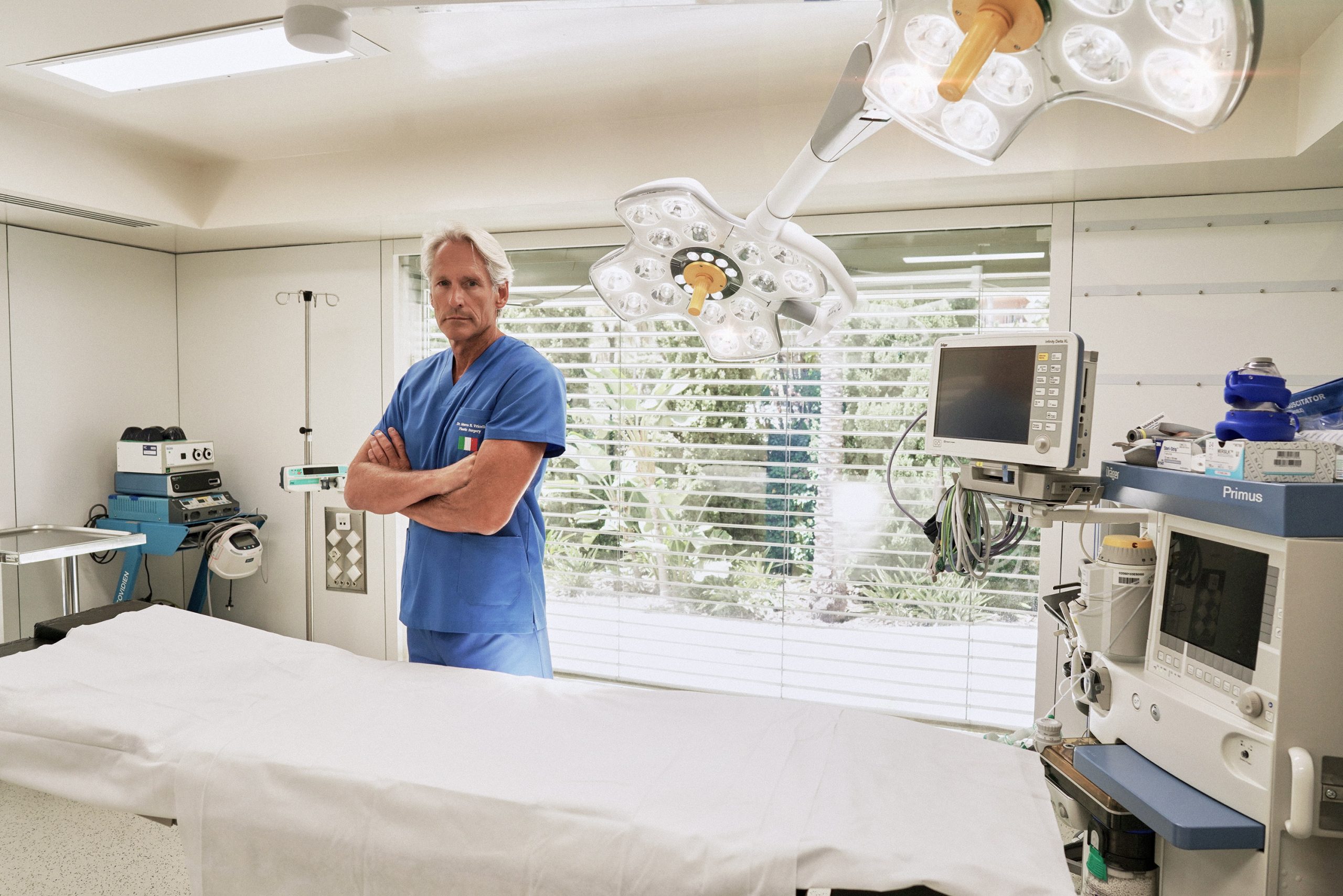
Dr. Marco Vricella, a specialist in reconstructive and aesthetic breast surgery, designs every surgical plan on a fully individualised basis, taking into account the degree of constriction, the patient’s own breast volume and her personal goals. The result is a natural, symmetrical and harmonious breast, in proportion with the rest of the figure.
Tuberous breast correction demands a reconstructive approach combined with precise aesthetic judgement. There is no single technique: Dr. Vricella selects the most appropriate procedure according to the degree of constriction, breast volume, associated ptosis and each patient’s individual goals.
Periareolar Technique with Implant
Indicated for mild to moderate degrees of constriction with insufficient breast volume. The incision is limited to the periareolar border: the constricted base is released, the herniated areola is reduced and repositioned, and an implant is placed to restore volume and projection with minimal scarring.
Grade I–II · Minimal Scarring
Mastopexy & Glandular Remodelling
For cases with significant ptosis and asymmetry in addition to constriction. Base release is combined with a mastopexy to reshape the gland and lift the nipple-areola complex. An implant may or may not be included depending on anatomy. Periareolar scar with or without a vertical component.
Grade II–III · Shape & Symmetry
Two-Stage Surgery
Reserved for the most complex cases. In a first operation, the constriction is released and the gland is reshaped; several months later, once the tissue has stabilised, implants are placed to optimise final volume and projection. This strategy maximises both safety and quality of outcome.
Grade III · Maximum Safety
Results · Benefits
Definitive correction — shape, symmetry and harmony
Tuberous breast correction with Dr. Vricella combines reconstructive techniques with precise aesthetic judgement. The goal is to release the constriction of the breast tissue, reshape the gland and achieve natural, symmetrical and harmonious contours in proportion with the rest of the figure.
Definitive correction of the congenital malformation with natural and long-lasting results
Symmetrical and harmonious contour, suited to the patient’s anatomy and proportions
Reduction and repositioning of prominent or herniated areolas
100% personalised surgical plan based on the degree of constriction and individual goals
Discreet scarring placed in anatomically low-visibility areas
Significant improvement in self-esteem and body image
Recovery after tuberous breast correction is comparable to a standard breast augmentation. Most patients can return to their daily routine within a few days, with discomfort managed with prescribed medication. Regular follow-up appointments are essential to ensure an optimal outcome.
Discharged same day or after 24 h — post-operative bra or compressive dressing from the outset
Week 1–2 — external sutures removed; scar care begins; return to non-physical work
3–4 weeks — continued use of the post-operative bra; return to gentle exercise
3–6 months — definitive result with the breast fully settled and scars maturing
Are you a candidate for tuberous breast correction?
Surgical correction of tuberous breasts is indicated for functional, aesthetic and psychological reasons. The most accurate way to determine this is through an individualised consultation, where Dr. Vricella will assess the degree of constriction, the extent of correction required and the most appropriate technique.
Ideal candidate profile
Narrow breast base with tubular or elongated breast shape
Large, prominent or herniated areolas
Significant asymmetry between both breasts
Impact on self-esteem, body image or relationships
Breast development complete (generally from 18 years of age)
Stable weight for at least 6 months prior to the procedure
Realistic expectations about the final surgical outcome
Additional considerations
Not recommended if pregnancy is planned in the near term (may affect breastfeeding)
Active smokers are advised to stop smoking at least 4 weeks before surgery
Complex cases may require two-stage surgery, with a gap of several months
Breastfeeding capacity may be affected depending on the technique used
Anticoagulants or other medications must be disclosed at consultation
Sufficient emotional readiness to manage the surgical process is required
The Process
From consultation to result
01
Initial Consultation
Assessment of the degree of constriction, full morphological analysis, selection of the most appropriate technique and planning of the expected outcome. No commitment required.
02
Surgical Planning
Pre-operative studies, precise pre-operative design, implant selection where applicable, and coordination of the procedure in Madrid, Marbella or Gibraltar.
03
Procedure
Surgery under general anaesthesia in an accredited operating theatre. Average duration of 2 to 3 hours depending on the complexity of the case and the technique chosen. Discharge on the same day or within 24 hours.
04
Post-operative Follow-up
Reviews at 48 h, 1 week, 1 month and 3 months. Dr. Vricella’s team will accompany your recovery through to the definitive result in Madrid, Marbella and Gibraltar.
Frequently Asked Questions
Tuberous Breasts — Your questions answered
The most frequently asked questions from patients considering tuberous breast correction in Madrid with Dr. Marco Vricella.
Tuberous breasts are a congenital malformation of breast development characterised by a narrow base, tubular or elongated shape, large or herniated areolas and frequent asymmetry. Diagnosis is made through physical examination during consultation and, when necessary, complementary diagnostic imaging. Many patients do not identify the condition until adolescence or when comparing with others.
There are mainly three grades of severity. Grade I involves constriction of the inferomedial quadrant; Grade II affects both inferior quadrants; Grade III involves constriction of the entire breast base with severe ptosis and significant areolar herniation. Each grade determines the most appropriate surgical technique, which Dr. Vricella selects following an individualised morphological assessment.
Not always. The decision depends on the degree of constriction and the patient’s own breast volume. In many cases, combining glandular remodelling with an implant offers the most harmonious result, but in others glandular reshaping alone is sufficient. Each case is planned on a fully individual basis during consultation.
In highly complex cases — Grade III with severe constriction and poor tissue quality — a two-stage approach may be necessary: first the base is released and the gland reshaped, and then, several months later once the tissue has stabilised, implants are placed to optimise volume. This strategy maximises both safety and the quality of the final result.
Recovery is similar to a standard breast augmentation. Most patients can return to daily activities within 5 to 7 days, avoiding strenuous physical effort for 3 to 4 weeks. A post-operative bra is recommended for 4 weeks, and regular check-ups with the surgeon are essential for monitoring progress.
The complication rate is low, under 2%. Risks include temporary changes in nipple sensitivity, suboptimal scarring, minor residual asymmetry and, in cases involving implants, the risks inherent to that procedure. The scar maturation process can take up to a year. Dr. Vricella will detail all specific risks during your personalised consultation.
Scars are predictable and well-positioned. In the periareolar technique they are limited to the areolar border; in more complex cases they may include a vertical line from the areola to the fold. With appropriate post-operative care — sun protection and scar-care creams — they fade considerably over time and become virtually imperceptible from the first year onwards.
In most cases, breastfeeding remains possible after correction. The surgical approach is planned to preserve the milk ducts as much as possible. However, the actual ability to breastfeed may be influenced by the patient’s pre-existing anatomy, since tuberous breasts frequently present with reduced glandular tissue from the outset.
Surgery is recommended once breast development is complete, generally from the age of 18. In cases of severe asymmetry with significant psychological impact, the specialist may consider an earlier intervention following a personalised consultation, always with prior evaluation of the patient’s stage of development.
You can request your consultation via the form on this page, by telephone or by email. Dr. Vricella’s team will contact you to arrange your first appointment in Madrid, Marbella or Gibraltar, with no commitment required. Contact us now →
First Step
Request your Consultation Today
Take the first step towards an informed decision. Dr. Vricella and his team will assess your case, explain the most appropriate technique and answer all your questions — with no commitment whatsoever.
Utilizamos cookies para mejorar tu experiencia de navegación y analizar el tráfico del sitio.
Puedes aceptarlas todas o personalizar tu elección.
Política de Cookies
Preferencias de Cookies
Selecciona qué categorías de cookies deseas permitir. Las cookies necesarias siempre están activas, ya que son imprescindibles para el funcionamiento del sitio.
Necesarias
Imprescindibles para el funcionamiento del sitio web. No pueden desactivarse.
Analíticas
Nos ayudan a entender cómo interactúas con el sitio (Google Analytics, etc.).
Marketing
Permiten mostrar publicidad personalizada y medir conversiones (Google Ads, Meta).